
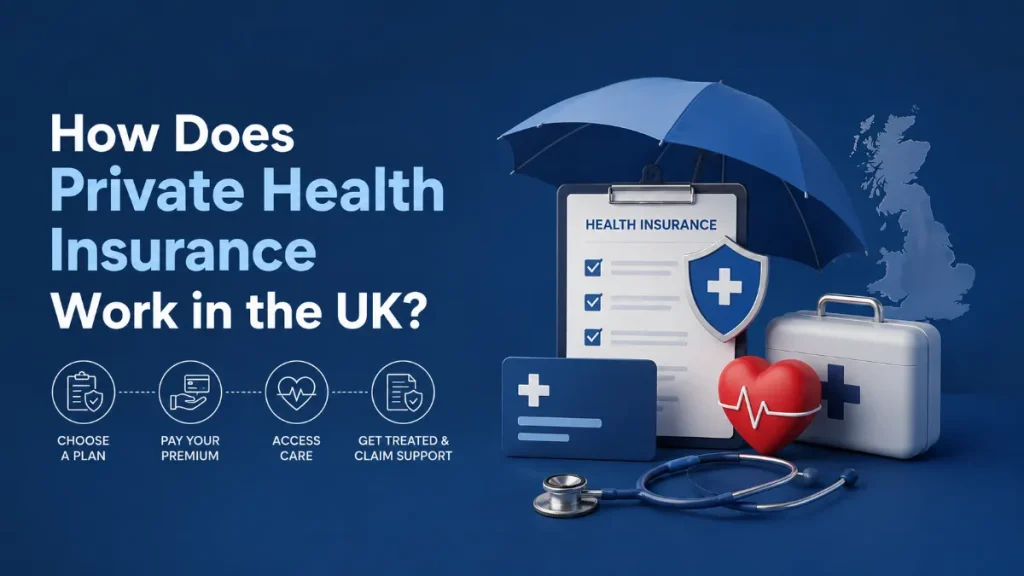
How Does Private Health Insurance Work in the UK? Private health insurance works alongside the free, state-funded NHS by helping pay for eligible private medical care. You pay an insurer a monthly or annual premium. If you develop a new covered illness or injury, the insurer may fund faster tests, specialist appointments or surgery after approving your claim.
Think of Private Medical Insurance (PMI) as a second route into healthcare rather than a replacement for the NHS. In 2026, the value of a policy usually depends on speed, choice and financial protection rather than unlimited treatment. However, the crucial details are exclusions, waiting periods, excesses and annual limits.
How Does Private Health Insurance Work in the UK?
Private health insurance usually covers new acute conditions that begin after the policy starts. Typically, you pay a premium, obtain medical advice when needed, request authorisation from the insurer and then receive approved treatment from a private provider.
Most policies ask you to see your NHS GP first. If the GP recommends further investigation or specialist care, they provide a referral. Meanwhile, some insurers offer a virtual private GP service, while certain policies allow direct access to selected specialists.
Before arranging private care, contact the insurer with your referral details. The provider then checks whether your condition is covered and gives pre-authorisation. Once approval is granted, you normally choose a consultant and hospital from the insurer’s approved network.
Generally, the hospital or consultant bills the insurer directly. You may still pay an agreed excess, which is the fixed amount you contribute towards a claim. In addition, some policies set limits on treatment costs or restrict the hospitals you can use.
What do private health insurance premiums pay for?
Premiums are the regular payments that keep your cover active. Usually, you can pay monthly or annually. An annual payment may cost less overall because monthly instalments can include a financing charge.
The price is not fixed across the market. For example, insurers commonly consider your age, smoking status, location, chosen benefits, medical history and the level of excess. Employer schemes may also negotiate different terms from individual policies.
What affects the cost of a policy?
- Age: premiums often rise as the likelihood of needing treatment increases.
- Cover level: outpatient consultations, diagnostic tests and cancer care can affect the price.
- Excess: choosing a higher excess can reduce the premium, but it increases your claim contribution.
- Hospital list: a wider choice of private hospitals may cost more than a restricted network.
- Payment method: monthly payments can have a different total cost from one annual payment.
For example, a person comparing two policies should not look only at the monthly figure. A cheaper plan may have a £500 excess, a smaller hospital list or a strict outpatient limit. Consequently, the lower premium may provide less practical value when treatment is needed.
Which conditions does private health insurance cover?
Most standard PMI policies focus on new, short-term conditions that can be treated or cured. In practice, they are designed for acute illnesses and injuries rather than routine management of long-term health problems.
Pre-existing conditions are usually excluded. This means symptoms, diagnoses or medical issues that existed before the policy began may not qualify for private treatment. Likewise, chronic conditions such as diabetes or asthma are commonly excluded from standard cover.
Policy wording matters because insurers use different definitions and underwriting methods. Some policies may review your medical history in detail. Others may apply a moratorium, which can exclude conditions from a defined period before cover began.
What is usually excluded?
- Conditions or symptoms that started before the policy began.
- Long-term chronic illnesses that require ongoing management.
- Routine pregnancy and childbirth care on many standard plans.
- Cosmetic procedures without a medical need.
- Treatment outside the policy’s benefit limits or approved provider network.
Never assume that a referral guarantees payment. Instead, the insurer must confirm eligibility under your actual policy. Therefore, read the exclusions, benefit limits and claims conditions before booking an appointment.
How do you claim on private health insurance?
To claim, you normally follow a short approval process before receiving private treatment. The usual route is an NHS GP appointment, a referral, insurer authorisation, provider selection and direct settlement of the approved bill.
- Speak to your GP: first explain your symptoms and follow the medical advice provided.
- Obtain a referral: your GP may refer you to a consultant or request diagnostic tests.
- Contact the insurer: provide the referral information and policy details.
- Check authorisation: confirm that the condition, consultant and hospital are covered.
- Arrange treatment: choose an approved specialist and private facility.
- Pay the excess: contribute the agreed amount if your policy includes one.
Some modern policies provide online GP consultations. As a result, these services may help arrange a referral faster. However, access rules vary, so check whether your plan requires an NHS GP or accepts a virtual appointment.
Keep your authorisation number, referral letter and appointment details. If you book privately before approval, you may have to pay the full bill yourself. That remains one of the most avoidable mistakes in PMI.
How soon can you use private health insurance?
You may not be able to claim immediately after buying a policy. In some cases, insurers apply waiting periods lasting several weeks or months. The exact rule depends on the policy, treatment type and insurer.
A new symptom can also create an eligibility question. If the insurer believes the symptom existed before the policy started, it may refuse the claim. Therefore, answer medical questions accurately and keep relevant records from your GP.
Private care can offer faster access after approval, but it does not guarantee an instant appointment. Ultimately, consultant availability, diagnostic capacity and the chosen hospital still affect the timescale.
What are the main benefits of private medical insurance?
The main benefit is access to private healthcare with greater control over timing and provider choice. Depending on the plan, you may see a specialist sooner and select from approved consultants, clinics and hospitals.
| Feature | Potential advantage | What to check |
|---|---|---|
| Faster appointments | May reduce the wait for eligible tests or consultations. | Approval, specialist availability and policy limits. |
| Provider choice | Can offer a selection of consultants and private hospitals. | Whether your preferred hospital is on the approved list. |
| Outpatient cover | May help pay for consultations and diagnostic investigations. | Annual limits and whether outpatient cover is included. |
| Digital services | Some plans include online GP or wellbeing services. | Eligibility, appointment rules and service restrictions. |
Extra benefits differ widely. For instance, some policies include online physiotherapy, digital health tools, meditation sessions or fitness content. These additions may be useful, but they should not distract from core medical exclusions.
What are the pros and cons of private health insurance?
Advantages
- Quicker access may be available for covered treatment.
- You may choose from a network of consultants and hospitals.
- Private rooms and quieter facilities may improve comfort during inpatient care.
- Employer-funded cover can provide a valuable benefit without an individual premium.
Limitations
- Pre-existing and chronic conditions are commonly excluded.
- Premiums can rise at renewal as circumstances and insurer pricing change.
- Excesses, annual limits and restricted hospital lists may reduce the value of cheaper plans.
- Private insurance does not cover every treatment or guarantee immediate care.
The Financial Conduct Authority’s insurance guidance explains why consumers should understand policy terms before purchase. Similarly, you can review general NHS services through the official NHS website.
Which policy features should you compare?
Compare the practical route from symptoms to treatment rather than just the headline premium. A sustainable policy should fit your budget while offering meaningful cover for the medical situations you are most concerned about.
- Inpatient and day-patient cover: check whether hospital treatment is included.
- Outpatient benefits: confirm limits for GP referrals, consultations and scans.
- Cancer cover: review included treatments, exclusions and financial caps.
- Hospital list: check access near your home or workplace.
- Excess: calculate what you could comfortably pay during a claim.
- Renewal terms: understand that cover and premiums may change each year.
Suppose you are starting with a modest budget. A restricted hospital list and a manageable excess may reduce the premium. However, removing outpatient cover could make early consultations and diagnostic tests less accessible.
For separate insurance research, you can read Best Car Insurance Companies in the USA. That guide concerns motor insurance rather than UK private healthcare, so it should not be used to compare PMI policies.
What common mistakes should you avoid?
Many claim problems begin before the first appointment. Often, they result from misunderstanding exclusions, skipping pre-authorisation or choosing a policy based only on price.
- Previous symptoms: disclose them when completing medical questions.
- NHS referrals: remember that referral letters do not automatically approve private treatment.
- Consultant bookings: check authorisation requirements before choosing a specialist.
- Excesses: include the claim contribution when comparing monthly premiums.
- Hospital access: confirm that your chosen private hospital accepts the insurer.
- Wellbeing services: treat optional features as additions rather than core cover.
As a practical check, save the insurer’s claims number and read the policy schedule after renewal. If your employer cover ends, ask about switching to a personal policy quickly. Some providers impose a transfer deadline, such as six weeks, but the actual period varies.
What happens when a policy renews or ends?
Most private health insurance policies renew every year. Usually, your insurer confirms the new premium and asks whether your circumstances have changed. Treatment terms, excesses and benefit limits may also be revised.
If you leave an employer health scheme, some insurers allow you to continue with personal cover. A switch may help prevent an interruption in treatment, but eligibility and deadlines depend on the provider and group scheme.
Families can often add partners or children to a policy. However, age definitions differ between insurers. Some providers may cover a child up to age 21 when they remain in full-time education, while household address rules may apply.
Frequently asked questions about private health insurance
Is private health insurance a replacement for the NHS?
No. PMI works alongside NHS healthcare. Therefore, you can continue using NHS services, while the policy may fund eligible private treatment under its own rules.
Can I claim for a condition I already had?
Usually not under a standard policy. Pre-existing conditions and symptoms from before the start date are commonly excluded, although underwriting rules differ.
Do I need an NHS GP referral?
Often, yes. Many policies require an NHS GP referral before specialist care. However, some insurers offer virtual private GP appointments or limited direct access.
Can I choose my private hospital?
Usually, you choose from the insurer’s approved hospital list. A preferred hospital may be unavailable if it falls outside your selected network.
What is an excess in health insurance?
An excess is the agreed amount you pay towards an approved claim. Although a higher excess can reduce the premium, it increases your cost when treatment is needed.
Can private health insurance cover chronic illnesses?
Standard PMI commonly excludes chronic conditions that need continuing management, such as diabetes or asthma. Therefore, check the policy wording for precise definitions.
Does private health insurance guarantee faster treatment?
No. It can provide faster access after approval, but appointments depend on consultant availability, hospital capacity and the terms of your policy.
Can I keep cover after leaving my employer?
Possibly. Some insurers offer a personal policy, but switching deadlines and continuation terms vary. Ask your employer or insurer before the workplace scheme ends.
What is the sensible next step in 2026?
Start by deciding what you want PMI to solve: faster specialist access, greater provider choice or protection against private treatment costs. Then compare exclusions, hospital networks, excesses, outpatient limits and renewal terms.
Private health insurance can be useful when its limits are understood. Accordingly, read the full policy documents, confirm cover before treatment and verify current terms with the insurer. For personal advice about health needs or affordability, consider speaking with a suitably authorised UK insurance adviser.
